
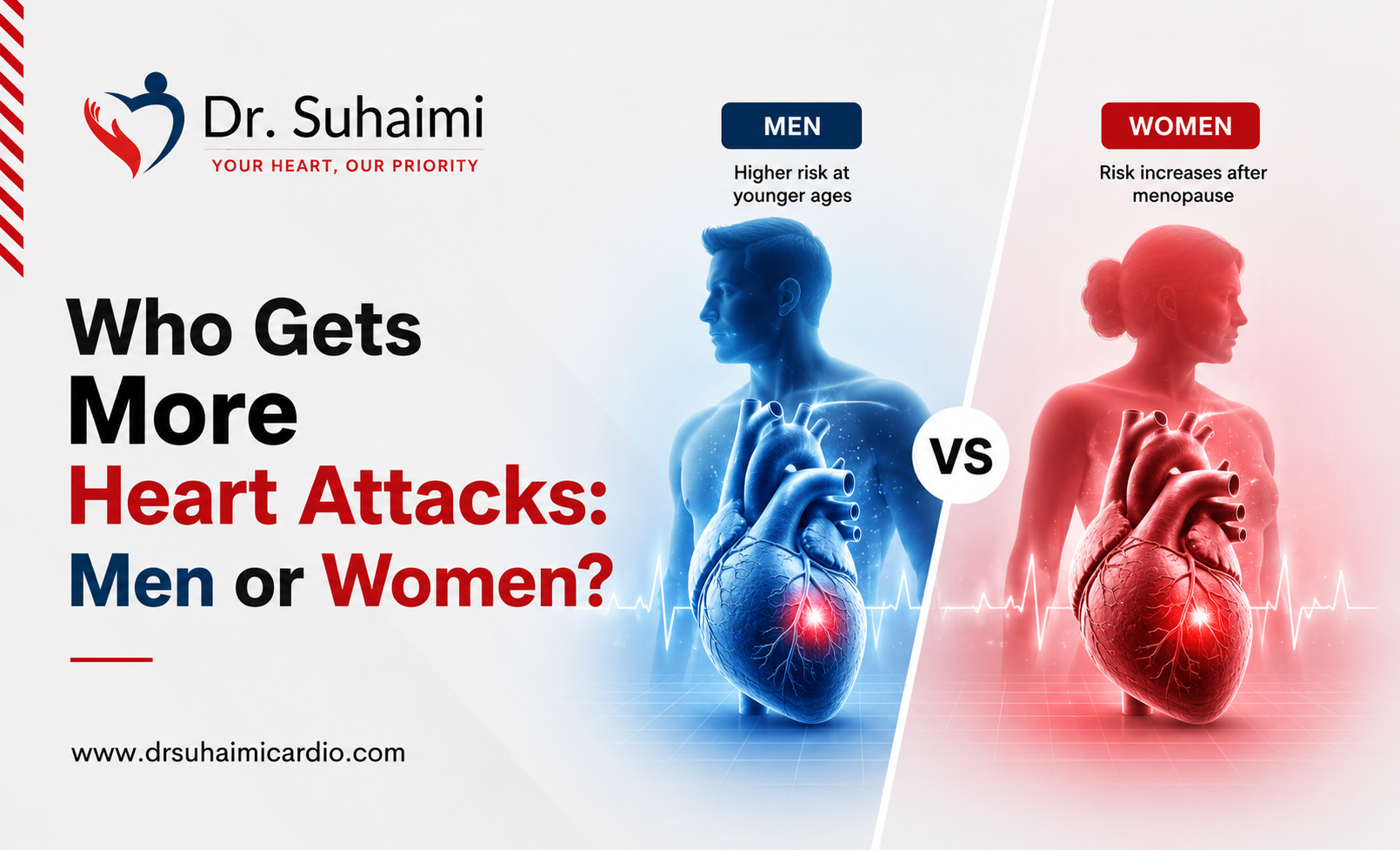
Who Gets More Heart Attacks: Men or Women?
When people hear the words “heart attack,” most instinctively picture a man clutching his chest. This assumption is so deeply ingrained that many women brush off their own warning signs, assuming heart disease is “a man’s problem.” That single misconception has cost countless lives. The truth is far more nuanced: while men do face a higher heart attack risk at a younger age, women often face worse outcomes once heart disease strikes — largely because their symptoms are harder to recognize and their diagnosis frequently comes too late.
In this article, we break down what the science and clinical data actually show, so you and your loved ones know exactly what to watch for, regardless of gender.
Do Men Really Get More Heart Attacks?
Statistically, yes — men are more likely to suffer a heart attack earlier in life than women. This is largely due to estrogen, a hormone that offers women a degree of natural cardiovascular protection until menopause. This is why heart attacks tend to be significantly more common in men between the ages of 45 and 55.
However, after menopause, this hormonal protection fades quickly, and a woman’s risk of heart disease rises sharply. By the time women reach their late 50s and 60s, their heart attack risk begins to catch up with — and in some age groups, even surpass — that of men. So while men face the risk earlier, women are far from immune; their risk simply arrives later and often more aggressively.
Why Heart Attacks Can Be More Dangerous for Women
This is the part most people don’t realize. Women’s heart attack symptoms often look completely different from the “classic” symptoms associated with men. Men typically experience sudden, intense chest pain, while women are more likely to feel subtle discomfort, unusual fatigue, shortness of breath, nausea, or pain in the jaw, neck, or back. These signs are easy to dismiss as stress, indigestion, or simple exhaustion.
Because of this, women’s diagnoses are frequently delayed, treatment starts later, and their mortality rate — especially within the first year after a heart attack — tends to be higher than men’s. Medical researchers and cardiologists worldwide are now actively working to close this diagnostic gap through better awareness and earlier screening.
Risk Factors That Affect Both Genders
Regardless of whether you’re a man or a woman, several risk factors apply equally:
- High blood pressure and uncontrolled hypertension
- High cholesterol and diabetes
- Smoking and a sedentary lifestyle
- Obesity and poor diet
- Family history of heart disease
- Chronic stress and inadequate sleep
The key difference is impact: conditions like diabetes and high blood pressure tend to damage a woman’s cardiovascular system more aggressively than they do a man’s — meaning the same risk factor can carry a disproportionately higher danger for women.
Why Recognizing Symptoms Early Matters
Chest pain isn’t always present during a heart attack, and its absence doesn’t mean everything is fine. If you experience recurring unexplained fatigue, breathlessness, dizziness, or a heavy feeling in the chest — especially if you’re over 40 or have a family history of heart disease — it should never be brushed aside.
Early diagnosis is often the single biggest factor in saving a life. If symptoms keep recurring, seeking Heart Attack Treatment in Malaysia from a qualified cardiologist without delay can make all the difference, whether the patient is male or female.
Prevention: Equally Important for Both Genders
The encouraging news is that a large percentage of heart disease is preventable. A few simple but effective habits go a long way:
- Regular physical activity (at least 150 minutes per week)
- A balanced diet low in salt and processed food
- Routine blood pressure and cholesterol checks
- Avoiding smoking and limiting alcohol intake
- Managing stress and prioritizing quality sleep
- Regular cardiac screening after age 40
These lifestyle changes aren’t just for men — they’re just as critical, if not more so, for women, particularly after menopause when cardiovascular risk climbs quickly.
Expert Insight: Dr. Suhaimi Bin Osman
Dr. Suhaimi Bin Osman, a highly experienced Interventional Cardiologist in Malaysia with over 17 years of clinical practice, has seen firsthand how many women dismiss their symptoms as “normal tiredness,” which often leads to delayed treatment and worse outcomes. He emphasizes that regardless of gender, persistent chest discomfort, breathlessness, or unusual fatigue should always be evaluated by a specialist without delay.
Why Timely Diagnosis Matters So Much
In cardiology, the principle of “time is muscle” holds true — the faster a heart attack is diagnosed and treated, the less permanent damage occurs to the heart. Diagnostic tools like ECGs, echocardiograms, and stress tests allow doctors to detect blockages or early warning signs before they escalate into a full-blown emergency.
This is especially relevant for people living in busy urban regions, where stress and sedentary routines are common. Scheduling a regular check-up with an experienced Cardiologist in Klang Valley is particularly important for individuals with a family history of heart disease or existing conditions like diabetes and hypertension.
Conclusion
Heart attacks are not exclusively a “man’s disease.” While men face a higher risk at a younger age due to biological factors, women often face a more dangerous and less predictable path once heart disease develops — largely because of delayed diagnosis and atypical symptoms. The real solution lies in awareness: understanding your own body, never ignoring warning signs, and seeking specialist care at the right time.
If you or a loved one is experiencing any heart-related symptoms, don’t wait. Getting evaluated by the right expert at the right time is the best form of prevention there is.
FAQs – Frequently Asked Questions
Q1. Do women experience different heart attack symptoms than men?
Yes. Men typically experience sudden, intense chest pain, while women are more likely to feel fatigue, breathlessness, jaw pain, or mild discomfort — symptoms that are often mistaken for something less serious.
Q2. At what age does heart attack risk increase the most?
In men, risk rises noticeably after age 45. In women, risk climbs sharply after menopause, typically between ages 50 and 55.
Q3. Can heart attacks be prevented?
In most cases, yes. Maintaining a healthy lifestyle, scheduling regular check-ups, and managing risk factors like blood pressure, cholesterol, and diabetes can significantly reduce the risk of a heart attack.
Q4. When should I see a cardiologist?
If you experience recurring chest discomfort, shortness of breath, or unexplained fatigue, or if you have a family history of heart disease, you should consult a specialist as soon as possible.
Q5. Is heart attack risk underestimated in women?
Yes, and this is one of the biggest challenges in cardiology today. This misconception often leads to delayed diagnosis in women, making their outcomes more dangerous compared to men.