
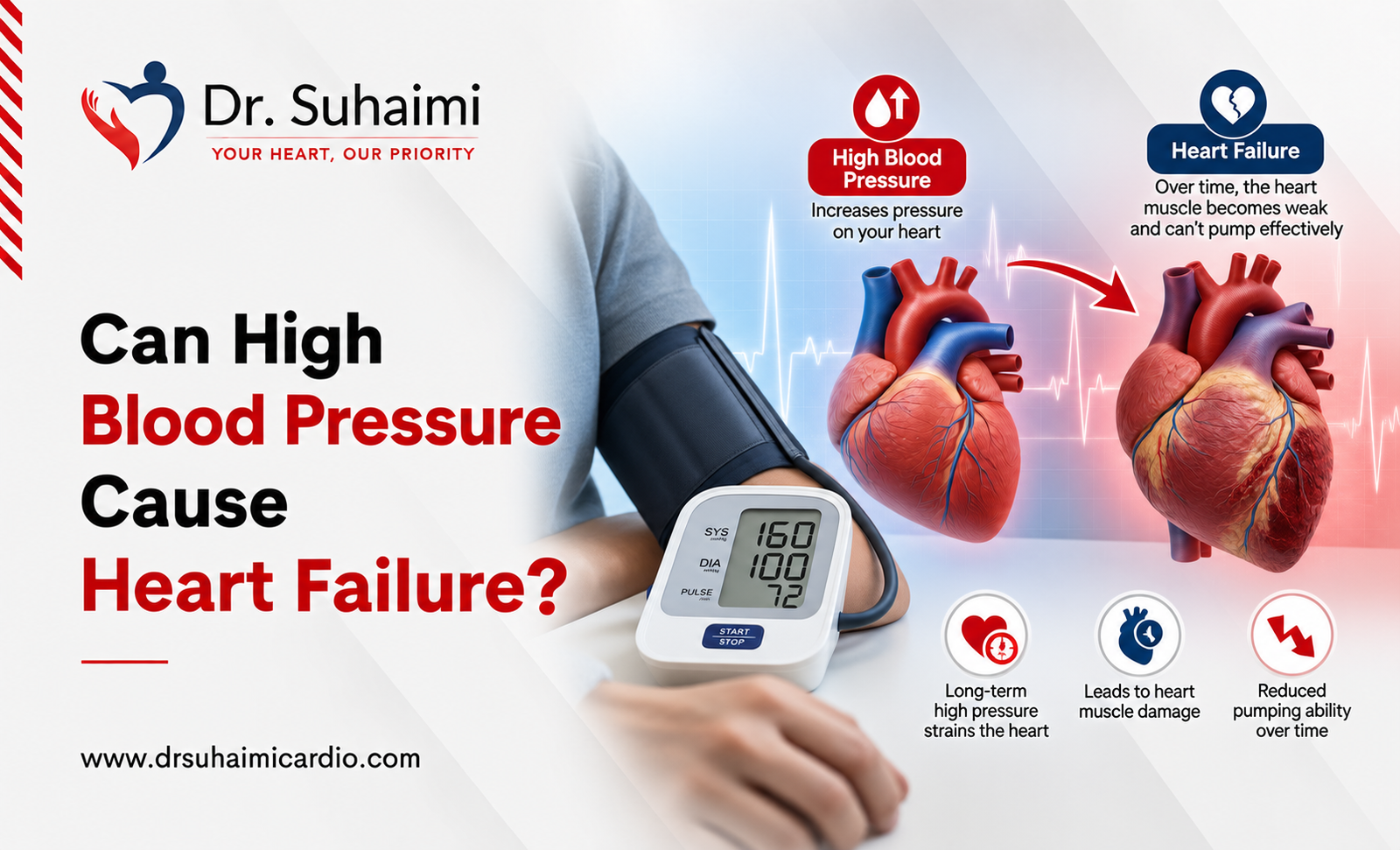
Can High Blood Pressure Cause Heart Failure?
Yes. When high blood pressure (hypertension) is left uncontrolled for years, it forces the heart to work harder than it should. Over time, the heart muscle thickens, stiffens, or weakens, and it can no longer pump blood effectively. This condition is called heart failure. The good news is that it is largely preventable when blood pressure is detected early and managed well.
What Is High Blood Pressure?
Blood pressure is the force of blood pushing against your artery walls as your heart pumps. It is recorded as two numbers: systolic pressure (when the heart beats) over diastolic pressure (when the heart rests).
A reading of around 120/80 mmHg is considered normal. Hypertension is generally diagnosed when readings stay at or above 140/90 mmHg on repeated measurements. Many adults with other risk factors, such as diabetes or kidney disease, are advised to aim even lower.
The real danger is that hypertension often has no symptoms. Many people feel completely fine while the damage builds up quietly, which is why it is often called the “silent killer.”
What Is Heart Failure?
Heart failure does not mean the heart has stopped working. It means the heart is not pumping blood as well as the body needs. As a result, fluid can build up in the lungs, legs, and abdomen, and organs may not receive enough oxygen-rich blood.
There are two main patterns:
- Reduced pumping strength: the heart muscle becomes weak and cannot squeeze properly.
- Stiff heart muscle: the heart pumps normally but becomes too stiff to relax and fill with blood.
High blood pressure can contribute to both.
How Does High Blood Pressure Lead to Heart Failure?
Think of your heart as a pump pushing water through a hose. If the hose becomes narrow and tight, the pump must work much harder to move the same amount of water. Here is what happens inside your body:
- The heart works under constant strain. High pressure in the arteries makes the left ventricle (the heart’s main pumping chamber) push against greater resistance with every beat.
- The heart muscle thickens. Like a muscle that is overtrained, the wall of the left ventricle grows thicker. This is called left ventricular hypertrophy. A thicker heart is stiffer and needs more oxygen.
- The arteries become damaged. Sustained high pressure injures artery walls and speeds up the build-up of fatty plaque. This raises the risk of coronary artery disease and heart attacks, which are another major cause of heart failure.
- The heart eventually weakens. After years of strain, the heart muscle can become exhausted and stretched, and its pumping power drops.
Other conditions such as diabetes, high cholesterol, obesity, kidney disease, and smoking make this process faster.
What Are the Warning Signs of Heart Failure?
Please see a doctor if you or a family member notice any of the following, especially if you already have high blood pressure:
- Shortness of breath during activity, or when lying flat
- Persistent tiredness or weakness
- Swelling in the ankles, feet, or legs
- Rapid or irregular heartbeat
- Sudden weight gain from fluid retention
- A persistent cough or wheeze, especially at night
- Reduced ability to exercise or climb stairs
If you have severe chest pain, fainting, or sudden severe breathlessness, seek emergency medical care immediately.
Who Is at Higher Risk?
You may be at greater risk of hypertension-related heart failure if you:
- Have had high blood pressure for many years, or have never had it checked
- Have diabetes or high cholesterol
- Are overweight or physically inactive
- Eat a diet high in salt and processed food
- Smoke or drink excessive alcohol
- Have a family history of heart disease
- Are over 40, although younger Malaysians are increasingly affected
How Is Heart Failure Diagnosed?
A cardiologist usually begins with a detailed history, a physical examination, and blood pressure measurement. Common tests include:
- ECG (electrocardiogram): checks the heart’s rhythm and electrical activity
- Echocardiogram: an ultrasound that shows the heart’s size, thickness, and pumping strength
- Blood tests: including markers that rise when the heart is under strain, as well as kidney function, cholesterol, and sugar levels
- Stress tests or CT coronary angiography: to check for blocked arteries when needed
Early testing matters because treatment works best before the heart is badly damaged.
Can Heart Failure From High Blood Pressure Be Prevented or Treated?
In most cases, yes. Controlling your blood pressure is the single most effective step. Treatment is usually a combination of lifestyle changes and medication. Seeking proper High Blood Pressure Treatment in Malaysia from Dr. Suhaimi Bin Osman typically involves a personalised plan that includes regular monitoring, medicines such as ACE inhibitors, ARBs, beta-blockers, or diuretics, and treatment of related conditions like diabetes and cholesterol. If heart failure has already developed, modern medicines can improve symptoms, reduce hospital stays, and help the heart function better. Never stop or change your medication without your doctor’s advice.
Lifestyle Habits That Protect Your Heart
Medication works best together with daily habits:
- Cut down on salt. Aim for less than 5 grams of salt (about one teaspoon) a day, as recommended by the World Health Organization. Be careful with sauces, instant noodles, and preserved food.
- Eat heart-friendly food. Choose vegetables, fruit, whole grains, fish, and lean protein.
- Stay active. Aim for at least 150 minutes of moderate exercise per week, such as brisk walking or cycling.
- Maintain a healthy weight. Even modest weight loss can lower blood pressure.
- Stop smoking and limit alcohol.
- Manage stress and sleep well, since poor sleep and chronic stress are linked to higher blood pressure.
- Check your blood pressure regularly, at home and at your clinic, and keep a log to show your doctor.
When Should You See a Heart Specialist?
Do not wait for symptoms. You should book a check-up if your blood pressure is repeatedly above normal, if you have a family history of heart disease, or if you feel breathless or unusually tired. If you live in the Klang Valley area, consulting Dr. Suhaimi Bin Osman a Heart Specialist in Selangor gives you access to a full range of tests and long-term follow-up close to home. Early assessment can detect heart changes long before they turn into heart failure.
Meet the Doctor: Dr. Suhaimi Bin Osman
Dr. Suhaimi Bin Osman is a Consultant Interventional Cardiologist and Internal Medicine physician with more than 17 years of clinical experience. He holds an MB BCh BAO from Queen’s University Belfast, MRCP (Ireland), and AM (Malaysia), and is a Fellow of the Society for Cardiovascular Angiography and Interventions (FSCAI) and the Asia Pacific Society of Interventional Cardiology (FAPSIC). He is registered with the Malaysian Medical Council (MMC No. 29820) and the National Specialist Register (NSR No. 128036).
His practice covers hypertension, heart failure, coronary artery disease, arrhythmias, angioplasty and stenting, pacemaker and ICD implants, cardiac imaging, and preventive cardiology. He consults in both Bahasa Malaysia and English at MSU Medical Centre. When looking for a trusted Cardiologist in Malaysia, patients often value this combination of international training, clear communication, and long-term follow-up care.
Frequently Asked Questions
Can high blood pressure cause heart failure even if I feel fine?
Yes. Hypertension often has no symptoms, yet it can slowly strain the heart for years. Regular screening is the only reliable way to catch it.
How long does it take for high blood pressure to cause heart failure?
There is no fixed timeline. It depends on how high the pressure is, how long it stays uncontrolled, and other risks such as diabetes or smoking. It commonly develops over many years.
Can heart failure caused by high blood pressure be reversed?
Early heart changes can improve when blood pressure is well controlled. Established heart failure usually cannot be fully cured, but it can be managed effectively with medication and lifestyle changes.
What blood pressure reading is dangerous?
A reading of 180/120 mmHg or higher, especially with chest pain, severe headache, breathlessness, or confusion, is a medical emergency. Seek urgent care.
Does taking BP medicine mean I will depend on it forever?
Most people with hypertension need long-term treatment, and stopping suddenly can be harmful. Your doctor may adjust doses over time based on your readings.
How often should I check my blood pressure?
If your readings are normal, check at least once a year. If you have hypertension, follow your doctor’s schedule, and consider home monitoring.
Key Takeaways
- Uncontrolled high blood pressure is one of the leading causes of heart failure.
- It makes the heart muscle thick, stiff, and eventually weak.
- Warning signs include breathlessness, swelling, and fatigue.
- Early detection, medication, and healthy habits can greatly reduce your risk.
- Regular check-ups with Dr. Suhaimi Bin Osman are the best protection.
Take the next step: Do not wait for symptoms to appear. To book a consultation with Dr. Suhaimi Bin Osman.