
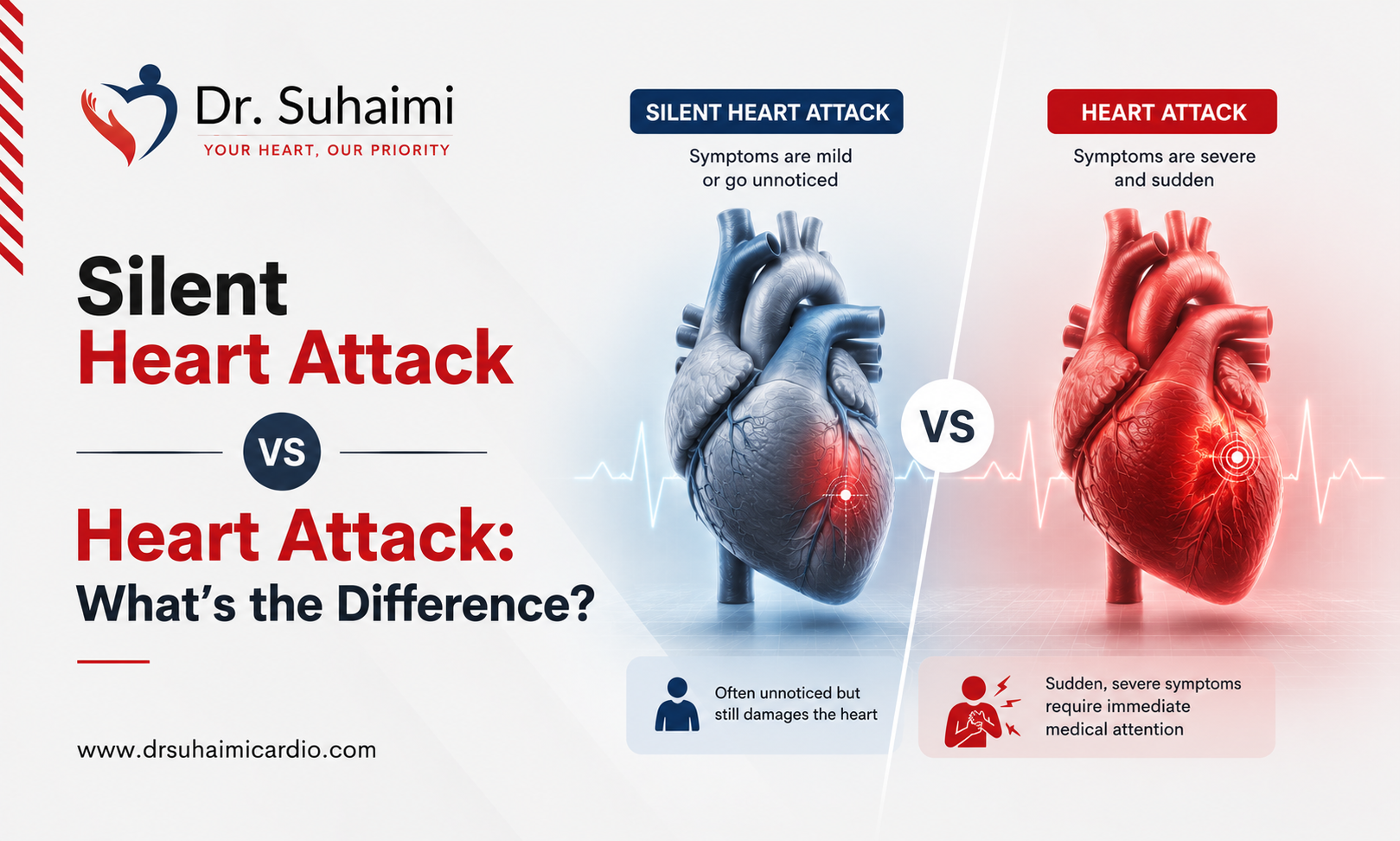
Silent Heart Attack vs Heart Attack: What’s the Difference?
Most people imagine a heart attack as a dramatic moment — crushing chest pain, someone clutching their chest, collapsing suddenly. But not every heart attack announces itself that way. Many happen quietly, with symptoms so mild they’re mistaken for indigestion, fatigue, or a bad night’s sleep. These are known as silent heart attacks, and they can be just as dangerous — sometimes more so — because they often go undiagnosed until serious damage has already occurred.
Understanding the difference between a silent heart attack and a typical heart attack isn’t just medical trivia. It can genuinely save a life, including your own or that of someone you love.
What Is a Typical Heart Attack?
A typical heart attack, medically known as a myocardial infarction, occurs when blood flow to a part of the heart muscle is suddenly blocked, usually by a clot forming in a narrowed coronary artery. Without oxygen-rich blood, that section of heart muscle begins to die within minutes.
The classic warning signs are hard to miss:
- Intense chest pain or pressure, often described as squeezing or a heavy weight
- Pain radiating to the left arm, jaw, neck, or back
- Sudden shortness of breath
- Cold sweats, nausea, or lightheadedness
- A sense of impending doom
Because these symptoms are so severe and sudden, most people recognize something is seriously wrong and seek emergency care immediately. This urgency, ironically, is what makes typical heart attacks somewhat easier to treat quickly — the alarm bells are loud enough that patients rarely ignore them.
What Is a Silent Heart Attack?
A silent heart attack, medically termed a “silent myocardial infarction” (SMI), causes the same underlying damage to the heart muscle — but with symptoms so subtle they’re barely noticed, or not noticed at all. Some people mistake the discomfort for muscle strain, acid reflux, flu-like fatigue, or simple exhaustion from a long day.
Common signs of a silent heart attack include:
- Mild discomfort in the chest that fades quickly
- Unusual tiredness lasting several days
- Slight shortness of breath during routine activities
- Indigestion-like discomfort or mild nausea
- A vague feeling of being “unwell” without a clear cause
Because these symptoms don’t scream “emergency,” people often carry on with daily life without realizing their heart has been damaged. Studies suggest silent heart attacks account for a significant portion of all heart attacks, and they’re frequently discovered only later, during an ECG or imaging test done for an unrelated reason.
Why Silent Heart Attacks Are So Risky
The danger of a silent heart attack lies precisely in its silence. Because the person doesn’t seek immediate treatment, the heart muscle may continue to be damaged, and the underlying blockage remains untreated. This raises the risk of:
- A second, potentially more severe heart attack
- Long-term weakening of the heart muscle (heart failure)
- Irregular heart rhythms
- Reduced overall heart function over time
People with diabetes are particularly vulnerable to silent heart attacks. Diabetes can damage nerves over time, including those that carry pain signals from the heart, which means chest pain may be dulled or absent altogether even during a genuine cardiac event.
Who Is Most at Risk?
Certain groups face a higher chance of experiencing a silent heart attack rather than a typical one:
- Individuals with diabetes or nerve damage
- Older adults, whose pain perception may be reduced
- Women, who more often present with atypical symptoms like fatigue or nausea rather than classic chest pain
- People with a sedentary lifestyle, high cholesterol, high blood pressure, or a family history of heart disease
- Smokers and those under chronic stress
If you fall into any of these categories, regular cardiac screening becomes even more important, since silent heart attacks won’t always give you an obvious warning.
How Are Silent Heart Attacks Detected?
Since symptoms are minimal or absent, silent heart attacks are usually discovered incidentally through:
- Electrocardiogram (ECG): Reveals abnormal electrical patterns pointing to previous heart muscle damage
- Echocardiogram: Shows areas of the heart that aren’t pumping effectively
- Cardiac MRI or CT scan: Provides detailed imaging of scar tissue from a past cardiac event
- Blood tests: Certain cardiac enzyme levels can hint at previous heart damage, though this is more useful in acute settings
This is exactly why routine health check-ups matter, especially for anyone over 40 or with existing risk factors. A cardiologist can often spot the aftermath of a silent heart attack long before it leads to a bigger crisis.
Silent Heart Attack vs Heart Attack: Key Differences at a Glance
| Aspect | Typical Heart Attack | Silent Heart Attack |
|---|---|---|
| Symptoms | Severe, sudden chest pain | Mild, vague, or absent |
| Recognition | Usually noticed immediately | Often missed or misattributed |
| Treatment timing | Prompt, emergency care | Delayed, sometimes discovered later |
| Common in | General population | Diabetics, elderly, women |
| Long-term risk if untreated | High, but treated urgently | High, due to delayed diagnosis |
Prevention Matters More Than You Think
Whether it’s silent or classic, most heart attacks share the same root causes: blocked or narrowed coronary arteries from plaque buildup. That means prevention strategies overlap significantly:
- Keep blood pressure and cholesterol within healthy ranges
- Manage blood sugar levels if you have diabetes or prediabetes
- Stay physically active with regular, moderate exercise
- Eat a heart-friendly diet low in saturated fat and salt
- Avoid smoking and limit alcohol intake
- Schedule regular cardiac screenings, especially if you have risk factors
Early detection through preventive cardiology can catch warning signs long before either type of heart attack occurs, making regular check-ups one of the simplest ways to protect your heart.
When Should You See a Heart Specialist?
Any unexplained chest discomfort, unusual fatigue, breathlessness, or a family history of heart disease is reason enough to get evaluated. Don’t wait for a dramatic symptom to justify a visit — silent heart attacks prove that the heart doesn’t always ask permission before causing damage. If you’re searching for a trusted Heart Specialist in Selangor, timely consultation can make the difference between early intervention and a delayed diagnosis.
For patients who have already experienced a cardiac event, choosing the right facility for Heart Attack Treatment in Malaysia is equally important. Modern cardiac care combines accurate diagnostics with minimally invasive procedures designed to restore blood flow quickly and protect long-term heart function.
Expert Care from Dr. Suhaimi Bin Osman
Dr. Suhaimi Bin Osman is a Consultant Interventional Cardiologist with over 17 years of experience in diagnosing and treating both silent and classic heart attacks. Holding qualifications including MB, BCH, BAO (UK), MRCP (Ireland), and Fellowships from FSCAI (USA) and FAPSIC (Hong Kong), he combines advanced clinical expertise with a compassionate, patient-first approach. As an experienced Interventional Cardiologist in Malaysia, he specializes in coronary angiograms, angioplasty, stenting, pacemaker and ICD implants, and comprehensive preventive cardiology — helping patients across Malaysia catch heart problems early and recover with confidence.
Whether your concern is a past silent cardiac episode discovered during routine testing, or you’re managing risk factors like hypertension and diabetes, personalized, evidence-based care can make all the difference to your long-term heart health.
Frequently Asked Questions
Can a silent heart attack heal on its own?
The heart muscle damaged during a silent heart attack does not “heal” back to normal function on its own; scar tissue forms in place of healthy muscle. Without medical evaluation and appropriate treatment, the underlying blockage that caused it usually remains, raising the risk of a future, more serious event.
How common are silent heart attacks?
Research suggests silent heart attacks make up a substantial share of all heart attacks, particularly among older adults and people with diabetes, though exact figures vary across studies and populations.
Is a silent heart attack less dangerous than a regular one?
Not necessarily. The heart muscle damage can be just as significant. The main added danger is delayed diagnosis and treatment, since symptoms aren’t obvious enough to prompt emergency care.
What tests detect a past silent heart attack?
An ECG, echocardiogram, or cardiac MRI can reveal signs of previous heart muscle damage, even if the person never experienced noticeable symptoms at the time.
Should I get a heart check-up even if I feel fine?
Yes, especially if you have risk factors like diabetes, high blood pressure, high cholesterol, a family history of heart disease, or are over 40. Silent heart attacks are, by definition, symptom-free — regular screening is often the only way to catch them.