
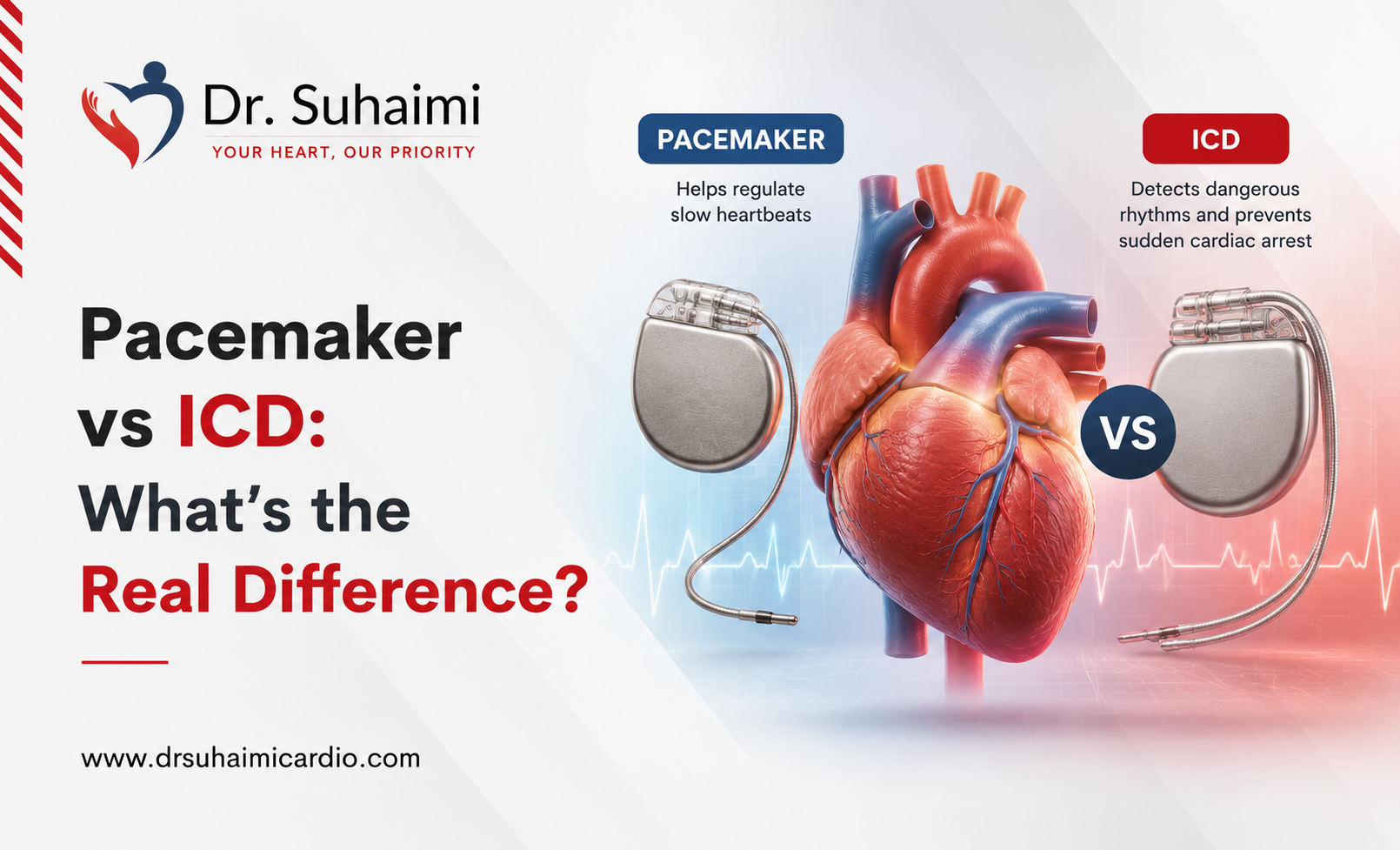
Pacemaker vs ICD: What’s the Real Difference?
If your doctor has recommended a heart device, you may have heard two terms come up — pacemaker and ICD (Implantable Cardioverter-Defibrillator). Both are small devices placed inside the chest to help the heart beat correctly, but they serve very different purposes. Confusing the two is common, and understanding the difference is essential before making any treatment decision.
This guide breaks it down clearly — what each device does, who needs it, and how to know which one is right for you.
What Is a Pacemaker?
A pacemaker is a small electronic device, roughly the size of a large coin, implanted under the skin near the collarbone. It continuously monitors your heart’s rhythm and sends gentle electrical signals to keep the heart beating at a steady, normal pace.
Pacemakers are typically used when the heart beats too slowly or when there are irregular pauses between beats. Without treatment, a slow heart rate can cause dizziness, fainting, extreme fatigue, and in severe cases, cardiac arrest.
Common conditions treated with a pacemaker:
- Bradycardia (slow heart rate)
- Heart block (delayed or blocked electrical signals)
- Sick sinus syndrome
- Fainting spells caused by heart rhythm problems
A pacemaker does not deliver a shock — it simply nudges the heart to maintain a healthy rhythm using low-energy electrical pulses.
What Is an ICD (Implantable Cardioverter-Defibrillator)?
An ICD is a more powerful device. Like a pacemaker, it is implanted under the skin and monitors heart rhythm around the clock. However, its primary job is to detect and stop life-threatening fast heart rhythms — specifically ventricular tachycardia (VT) or ventricular fibrillation (VF), which are the most common causes of sudden cardiac death.
When the ICD detects a dangerously fast or chaotic rhythm, it delivers a controlled electric shock to reset the heart back to a normal rhythm. This shock can be the difference between life and death in a cardiac emergency.
Common conditions treated with an ICD:
- Ventricular tachycardia (VT)
- Ventricular fibrillation (VF)
- Survivors of sudden cardiac arrest
- Severe heart failure with risk of sudden death
- Certain inherited heart conditions like Brugada syndrome or hypertrophic cardiomyopathy
Many modern ICDs also include pacemaker functions, meaning they can treat both slow and fast rhythms in one device.
Pacemaker vs ICD: Key Differences at a Glance
| Pacemaker | ICD | |
| Main Function | Prevents slow heartbeat | Stops dangerous fast rhythms |
| Delivers a shock? | No | Yes, when needed |
| Who needs it? | Bradycardia, heart block | VT, VF, cardiac arrest risk |
| Device size | Small | Slightly larger |
| Battery life | 7–15 years | 5–10 years |
Which One Do You Need?
This is a question only a qualified cardiologist can answer — and it depends entirely on your diagnosis, your heart’s electrical activity, and your medical history.
If your heart beats too slowly and needs a regular nudge, a pacemaker is likely the recommendation. If your heart is at risk of suddenly going into a dangerous fast rhythm — particularly if you have a history of cardiac arrest, severe heart failure, or a genetic heart condition — an ICD is the more appropriate choice.
Some patients require a CRT-D (Cardiac Resynchronisation Therapy Defibrillator) — a combination device that coordinates the pumping of the heart’s chambers while also providing defibrillation. Your cardiologist will recommend the device that best matches your condition after a thorough evaluation, including an ECG, echocardiogram, and Holter monitoring.
If you are looking for expert guidance on heart rhythm disorders or device therapy, consulting an experienced Cardiologist is the most important first step.
Life With a Heart Device: What to Expect
Both pacemakers and ICDs are implanted through a minimally invasive procedure, usually completed in under two hours, with a short recovery period. Most patients return to normal daily activities within a week or two.
Once implanted, the device works silently in the background — you won’t feel it unless the ICD delivers a shock. Routine follow-ups with your Cardiologist in Klang Valley are important to check battery life, review device data, and adjust settings as your condition changes.
About Dr. Suhaimi Bin Osman
Dr. Suhaimi Bin Osman is a Consultant Interventional Cardiologist and Physician with over 30 years of expertise in managing complex heart conditions. Holding qualifications including MB BCh BAO (UK), MRCP (Ireland), AM (Malaysia), FSCAI (USA), and FAPSIC (HK), Dr. Suhaimi is one of Malaysia’s most trusted specialists in pacemaker and ICD implantation, arrhythmia management, angioplasty, and preventive cardiology. As a highly regarded Pacemaker Specialist Doctor in Malaysia, he brings world-class training and a patient-first approach to every consultation, ensuring each patient fully understands their condition and the right treatment path forward.
Frequently Asked Questions
Is pacemaker or ICD surgery painful?
Both procedures are performed under local anaesthesia with sedation. Patients typically experience mild discomfort at the implant site for a few days, but the procedure itself is not painful.
Can an ICD shock be felt?
Yes. If the ICD delivers a shock, patients describe it as a sudden thump or jolt in the chest. While startling, it is a sign the device is working correctly.
How long does a pacemaker or ICD last?
Battery life varies by device and usage — generally 5–15 years. Your cardiologist will monitor this during regular check-ups and replace the device when needed.
Can I live a normal life with a pacemaker or ICD?
Absolutely. The vast majority of patients with implanted devices lead full, active lives. Your cardiologist will provide specific guidance based on your device type and condition.
If you have been diagnosed with a heart rhythm disorder or have concerns about your heart health, don’t wait. Consult Dr. Suhaimi Bin Osman — an experienced Cardiologist in Selangor — for accurate diagnosis, expert device evaluation, and personalized cardiac care.