
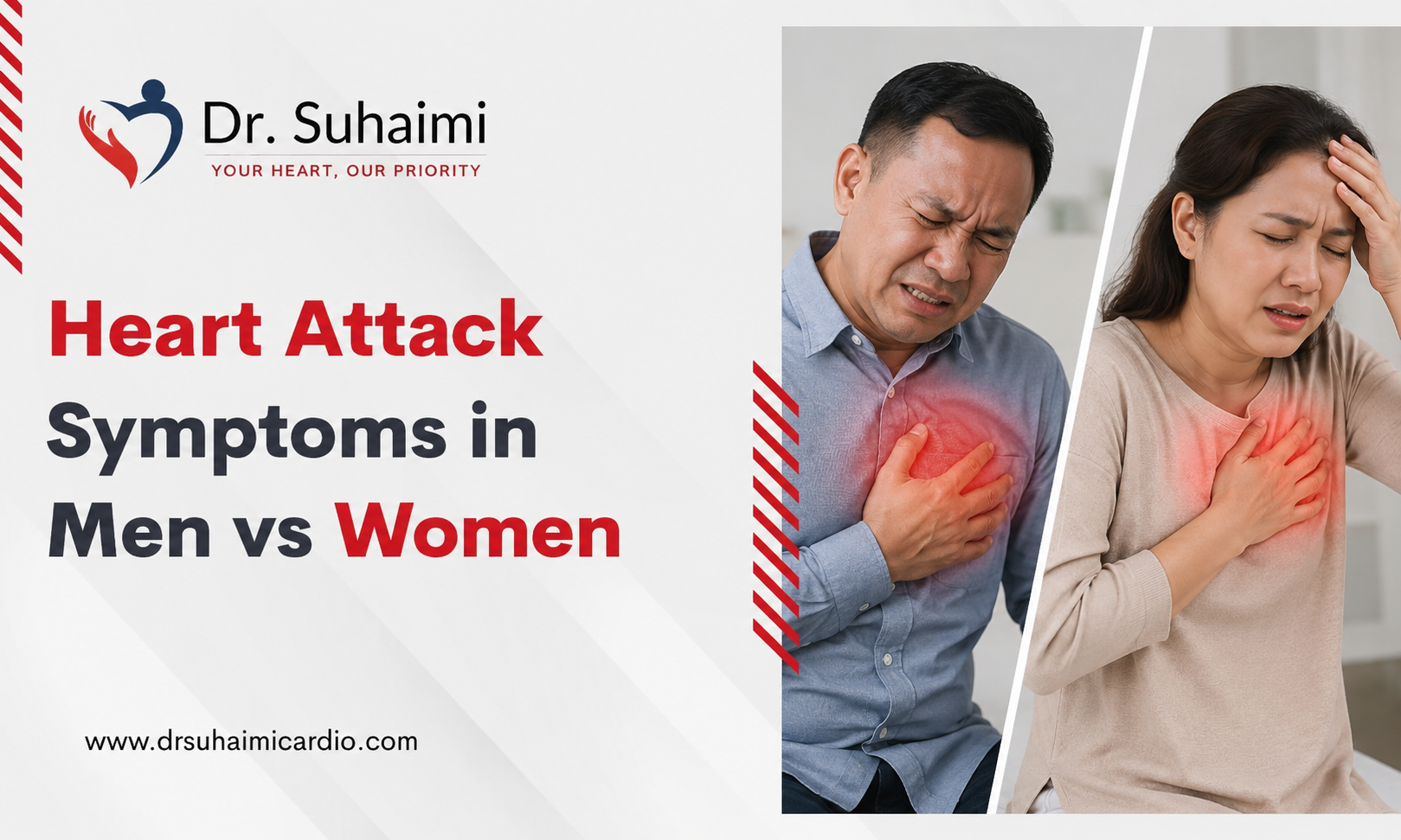
Heart Attack Symptoms in Men vs Women
When most people imagine a heart attack, they picture sudden, crushing chest pain — someone clutching their chest and collapsing. This image, while accurate for many men, often fails to capture how heart attacks actually present in women. This gap in awareness is dangerous, and it’s one of the biggest reasons heart attacks in women are missed, misdiagnosed, or treated too late.
Understanding how symptoms differ between men and women isn’t just medical trivia — it can be the difference between getting help in time and not getting help at all.
How Heart Attack Symptoms Appear in Men
Men typically experience the “classic” heart attack symptoms most people are taught to recognize:
- Sudden, intense chest pain or pressure, often described as a heavy weight on the chest
- Pain radiating down the left arm
- Cold sweats
- Shortness of breath
- A sense of impending doom
These symptoms tend to come on suddenly and are usually severe enough that men seek emergency help quickly.
How Heart Attack Symptoms Appear in Women
Women often experience heart attacks very differently — and far more subtly. Instead of dramatic chest pain, women are more likely to report:
- Unusual fatigue, sometimes lasting for days before the attack
- Shortness of breath, even without chest discomfort
- Nausea, vomiting, or indigestion-like discomfort
- Pain in the jaw, neck, back, or shoulder rather than the chest
- Lightheadedness or cold sweats
- A vague feeling of pressure or tightness, rather than sharp pain
Because these symptoms resemble stress, anxiety, or stomach issues, women frequently delay seeking treatment — and so do the people around them. This is one of the key reasons women face higher post-heart-attack mortality rates than men.
Why This Difference Matters
Heart disease remains the leading cause of death for both men and women worldwide, yet women are still under-diagnosed during the early, most treatable stages. Hormonal differences, smaller blood vessels, and a higher likelihood of microvascular disease (where smaller arteries are affected rather than one major artery) all contribute to this atypical symptom pattern in women.
The takeaway is simple: chest pain is not the only warning sign. If something feels “off” — persistent fatigue, breathlessness, or unexplained nausea — it deserves medical attention, especially if you have risk factors like high blood pressure, diabetes, high cholesterol, smoking history, or a family history of heart disease.
What to Do If You Notice These Symptoms
Don’t wait for symptoms to become unbearable. Early evaluation through an ECG, echocardiogram, or stress test can detect problems long before a full heart attack occurs. If you experience sudden chest discomfort, breathlessness, or any combination of the symptoms above, seek emergency care immediately — every minute matters when it comes to heart muscle damage.
If you’re looking for a trusted Cardiologist in Selangor to evaluate your symptoms or simply get a preventive heart check-up, timely consultation can make all the difference.
About Dr. Suhaimi Bin Osman
Dr. Suhaimi Bin Osman is a highly experienced Consultant Interventional Cardiologist and Physician, with decades of expertise in diagnosing and treating heart disease, hypertension, arrhythmias, and metabolic disorders. He holds international qualifications — MB BCh BAO (UK), MRCP (Ireland), AM (Malaysia), FSCAI (USA), and FAPSIC (HK) — and specializes in angioplasty, stenting, pacemaker and ICD implants, echocardiography, and preventive cardiology. Known as a trusted Cardiologist in Klang Valley, Dr. Suhaimi combines advanced diagnostic technology with a compassionate, patient-first approach, helping patients across Malaysia receive accurate diagnosis and personalized, effective heart care.
Frequently Asked Questions
Can a heart attack happen without chest pain?
Yes. This is especially common in women, who often experience fatigue, nausea, or jaw/back pain instead of classic chest pain.
Are women at lower risk of heart attacks than men?
No. Heart disease is the leading cause of death in women too, but it’s frequently underdiagnosed due to atypical symptoms.
When should I see a cardiologist?
If you experience chest discomfort, breathlessness, palpitations, unexplained fatigue, or have risk factors like high blood pressure, diabetes, or a family history of heart disease, it’s time to consult a specialist.
If you or a loved one are experiencing any warning signs, don’t wait. Book a consultation with Dr. Suhaimi Bin Osman, an experienced Heart Specialist Doctor in Malaysia, for accurate diagnosis and personalized cardiac care.